AI integrations expose platforms without headless DNA
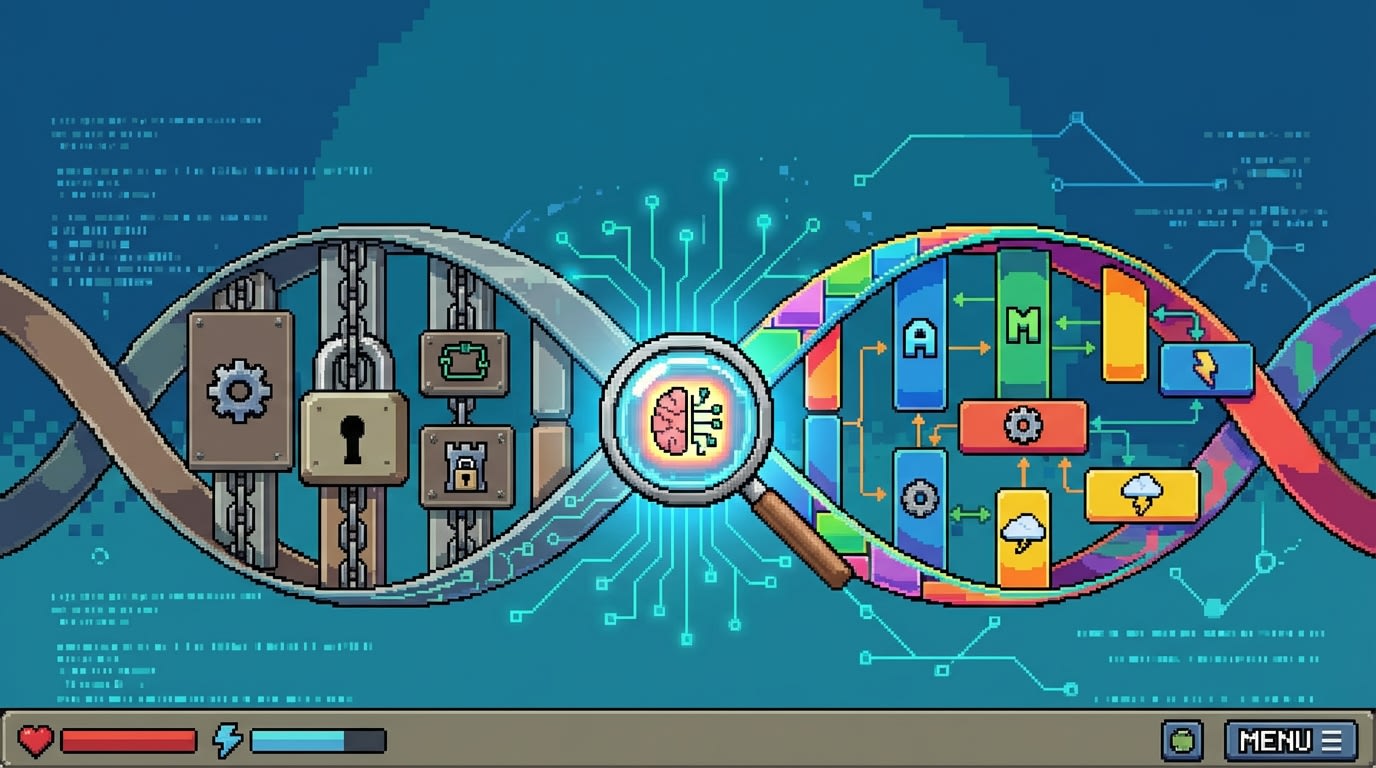
AI is changing the conversation in a way the industry has not fully processed yet. For years we debated headless, MACH, DXC, orchestrators, and every buzzword that came and went. Now AI has entered the chat and it is pulling the mask off any platform that only pretended to be API first.
Some vendors were monoliths for decades and now claim they are headless. Maybe on paper. But when they start building AI into their platforms, the real DNA shows up. They build AI the same way they built everything else: tightly coupled, centrally controlled, and anything but composable.
This is where things get interesting. Because when you build AI on top of true API first foundations, something very different emerges.
TL;DR
AI exposes the architectural truth of every digital platform. Vendors with real API first DNA can deliver AI native composability where agents, events, and automation behave like modular building blocks connected through open interfaces. Vendors that grew up as monoliths bolt AI features onto their core and cannot escape the constraints of their architecture. Contentstack’s AgentOS represents the next logical layer of MACH because it treats AI as an extensible system instead of a preset feature. Brands gain the freedom to create their own agents, refine event flows, combine deterministic automations, and use helpers like BrandKit to orchestrate intelligence that fits their specific needs. The simple takeaway: judge AI claims by the architecture behind them, not the marketing around them.
The why
AI is not a feature you slap onto the side of a CMS. It is not a universal template that every brand can use out of the box. It is not a one size fits all magic workflow.
AI is orchestration.
The moment a brand starts building AI driven experiences, reality hits. Every team needs something slightly different. Editorial teams need guardrails. Marketing teams need brand enforcement. Legal needs approvals. Developers want predictable events and clean APIs. None of these things are identical across companies.
This is exactly where monolith born vendors hit the wall. Their systems were never built for user defined logic at the edges, so when they add AI, they ship it in a single workflow with limited knobs. It demos well but crumbles under real world complexity.
AI native composability solves this by starting from a simple truth: every brand must be able to compose its own intelligence.
The how
When a platform is born API first, AI can be treated as an operating system rather than an add on. That is the real breakthrough behind Contentstack AgentOS.
AgentOS gives brands a set of primitives to build the agents they need. Agents that are API addressable. Agents that combine with each other. Agents that plug into a flexible event model that brands can shape to their own ways of working.
Add helpers like BrandKit for guardrails and deterministic automations for predictable outcomes and you suddenly have a full stack for AI native composability.
Instead of forcing teams into someone else’s workflow, AgentOS lets them compose their own. Developers get clarity. Marketers get flexibility. Editors get control. And the business finally gets a system that fits their world instead of forcing them into a vendor shaped box. This is what the next era of MACH looks like. We made content composable. We made services composable. Now we are making intelligence composable.
Challenges
None of this is without friction. Composing AI requires intention and collaboration. Teams used to turnkey solutions sometimes expect AI to fix everything with one click. That is not reality. The value comes from refining agents, shaping events, and building guardrails so the system behaves consistently.
It also demands maturity. Developers need to think in APIs. Editors need to be comfortable with iterative workflows. Marketers need to understand that orchestration is part of the story now.
The real challenge is the noise in the market. Everyone claims AI. Very few have architecture that supports it.
Concluding
AI native composability is not hype. It is where MACH is heading and it exposes the platforms that only pretended to be API first.
If there is one thing you remember, let it be this:
Judge the vendor not by the AI they demo but by the architecture that powers it.
Contentstack AgentOS shows what happens when you start with true API first DNA. It is an operating system for brand specific intelligence. It is flexible by design. It is built the MACH way. And it points to where the industry is going next.
On this page
Related articles

The MACH monolith in 2026
The 2022 diagnosis was right. Composable architectures need orchestration or they collapse. But the form factor was wrong. Teams rejected standalone orchestration layers as too heavy, another vendor, contract, and critical path. The 2026 reality is platforms that integrate orchestration directly, staying API-first and modular while providing built-in coordination. The shift isn't about more tools, but smarter platforms that reduce complexity fatigue without losing flexibility.
- Composable architecture
- AI engineering
- CMS

It's time to think of LLMs as having abilities, not protocols
TL;DR Don't over-engineer standards around protocols. Instead, treat your large-language-model as a toolbox of abilities (like search, translate, query, generate) that you plug into your system. By thinking of LLMs as modular and composable abilities rather than monolithic protocols, AI becomes accessible, practical and aligned with how engineering and product teams already build.
- Composable architecture
- AI engineering
- CMS

AI chat interfaces will replace web apps
A firsthand look at how AI-driven chat interfaces could reshape SaaS and user interaction.
- Composable architecture
- AI engineering
- CMS