Do we still need SDKs in the age of AI agents?

AI is fundamentally changing what’s considered “normal” in the developer world. The traditional approach of building, maintaining, versioning, and distributing SDKs is becoming obsolete when you have well-designed APIs and proper specifications.
Let me show you what I mean.
Before we dive in, I actually created an Agent Skill that creates an SDK from an OpenAPI spec. See my collection here: https://github.com/timbenniks/timbenniks-agent-skills
The traditional SDK burden
Creating an SDK is a lot of work. You need to design the interface, implement methods for every API endpoint, handle authentication, manage errors, write tests, create documentation, and then maintain all of this across multiple versions as your API evolves. That’s before we even talk about supporting multiple programming languages.
For vendors, this means dedicated teams spending months building SDK libraries. For developers, it means dependency management, version conflicts, and waiting for SDK updates when APIs change.
Here’s the thing - if you have a good API and an OpenAPI specification, an AI agent can do all of this for you in seconds.
One prompt, production-ready client
I recently needed to work with the Contentstack Launch API. Instead of waiting for an official SDK or building a client by hand, I took a different approach. The Launch API documentation includes an OpenAPI spec at https://launch-api.contentstack.com/openapi.
I gave an AI agent one prompt with that spec, and it generated a complete, production-ready TypeScript client. Not a prototype. Not a starting point. A fully functional client with proper typing, error handling, and all the methods I needed.
Here’s what that looks like in practice:
const BASE_URL = process.env.NEXT_PUBLIC_LAUNCH_API_BASE_URL || "https://eu-launch-api.contentstack.com";

export class LaunchApiClient {
  private accessToken: string;

  constructor(accessToken: string) {
    this.accessToken = accessToken;
  }

  private async request<T>(endpoint: string, options: RequestInit = {}): Promise<T> {
    const url = `${BASE_URL}${endpoint}`;
    const response = await fetch(url, {
      ...options,
      headers: {
        "Content-Type": "application/json",
        Authorization: `Bearer ${this.accessToken}`,
        "x-cs-api-version": "1.0",
        ...options.headers,
      },
    });

    if (!response.ok) {
      const error: LaunchApiError = await response.json().catch(() => ({
        errors: [{ code: "UNKNOWN_ERROR", message: response.statusText }],
        status: response.status,
      }));
      throw new Error(error.errors[0]?.message || "API request failed");
    }

    return response.json();
  }

  // All API methods generated from OpenAPI spec
  async getProjects(limit?: number, skip?: number) { ... }
  async createProject(data: ProjectData) { ... }
  async getDeployments(projectUid: string, environmentUid: string) { ... }
  // ... dozens more methods
}
Fully typed. Error handling included. Ready to use across my entire project. No npm install. No version conflicts. No waiting for the vendor to update their SDK.
The OpenAPI advantage
The key enabler here is the OpenAPI specification. A well-crafted spec contains everything an AI agent needs to understand your API: endpoints, request parameters, response schemas, authentication requirements, error formats.
When your API has a proper OpenAPI spec, you’re essentially providing machine-readable documentation that AI agents can consume and transform into working code. The spec becomes more valuable than any hand-written SDK because it’s the source of truth that can generate clients in any language, tailored to any use case.
This is where many vendors are missing the opportunity. They spend resources building SDKs instead of investing in excellent API design and comprehensive OpenAPI specifications.
The trade-offs you need to consider
Let’s be real - this approach isn’t all sunshine and rainbows. Traditional SDKs offer value-adds that generated clients might not include out of the box: sophisticated retry logic, circuit breakers, rate limiting, pagination helpers, caching strategies, and framework-specific integrations.
But here’s the pragmatic view: with the right prompts, an AI agent can generate those features too. The difference is you’re explicit about what you need instead of getting a one-size-fits-all solution. You want retry logic? Ask for it. Need rate limiting? Specify the requirements. The agent can build exactly what your use case demands.
The real question is whether the SDK provides genuine value beyond what the API offers directly. If the SDK has “magic” that the API doesn’t expose, that’s a legitimate reason to use it. However, I’d argue that’s often a sign of poor API design. A well-designed API shouldn’t require an SDK to be usable - the SDK should just make it more convenient.
The hard truth
Here’s where this gets uncomfortable: developers need to learn to work with AI agents effectively. This isn’t optional anymore. The landscape is changing, and the ability to prompt AI agents to generate high-quality, production-ready code is becoming a core skill.
This doesn’t mean we abandon traditional software engineering principles. It means we apply them differently. Instead of writing every API client by hand, we describe what we need clearly and let AI handle the implementation. We review the generated code, test it properly, and iterate on the prompts to get exactly what we want.
For solo developers and small teams, this is liberating. You’re no longer dependent on vendor release cycles or blocked by missing SDK features. For larger organizations, it means reconsidering what your developer relations and SDK teams should actually be building.
When SDKs still make sense
There are legitimate scenarios where vendor-maintained SDKs provide real value. If an SDK offers abstractions that simplify complex workflows, provides intelligent defaults based on best practices, or includes framework-specific integrations that would be difficult to generate, it’s worth using.
But if the SDK is primarily wrapping API calls that are already well-documented in an OpenAPI spec, you might be better off generating your own client. You get exactly what you need, nothing more, with no extra dependencies.
The vendors who recognize this shift will stop treating SDKs as the primary developer interface and instead focus on excellent API design and comprehensive specifications. The OpenAPI spec becomes the product, and SDKs become one of many possible generated artifacts.
Concluding: adapt or get left behind
AI agents are changing what’s possible in software development. The traditional model of hand-crafted, vendor-maintained SDKs for every language is becoming increasingly inefficient when well-designed APIs with OpenAPI specs can generate equivalent clients on demand.
This doesn’t mean every SDK disappears overnight. It means we need to rethink what value SDKs actually provide beyond simple API wrapping. If your SDK is just making HTTP requests with typed interfaces, an AI agent can do that. If your SDK provides genuine abstractions and value-adds that aren’t in the API itself, it still has a place.
The future belongs to APIs designed for both humans and AI agents to consume. Good documentation, comprehensive OpenAPI specs, and clear patterns become more important than pre-built SDKs. Developers who embrace AI-assisted development will move faster and build more precisely tailored solutions.
The only question is whether you’re ready to let go of the traditional approach and trust AI agents to build your API clients. I am. The LaunchApiClient sitting in my production codebase proves it works.
On this page
Related articles

Skills over MCP explained: how the new extension delivers workflows alongside tools
How the new MCP Skills Extension works, from skill discovery and on-demand loading to content verification, workflow guidance, and managed profiles.
- Composable architecture
- AI engineering
- API design

The Doer Economy - we are killing the translator class
This article argues that AI is collapsing the distance between vision and execution, ushering in a Doer Economy where the primary winners are those who can both imagine and build. The traditional corporate stack of translators (product managers, marketers, and multiple layers of management) is shrinking because executional tasks are increasingly handled by AI. Founders and CEOs are moving closer to product, validating ideas directly with AI-generated scaffolds and modern SaaS primitives. For individuals, the value has shifted from narrow, ticket-driven skills to end-to-end ownership, product thinking, and understanding users. The future belongs to people who ship, iterate quickly, and leverage AI and SaaS platforms to focus on business logic and user experience, rather than those who only manage the builders.
- Composable architecture
- AI engineering
- API design
The tool catalog is the product
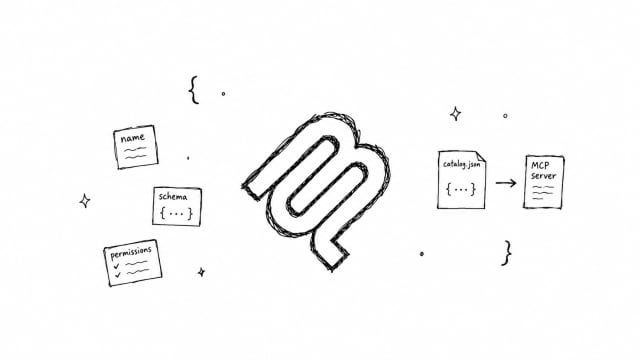
We exposed Contentstack MCP tool definitions through a server endpoint as JSON. That sounds small, but it changes the product shape. The hosted MCP server becomes one official implementation of a reusable tool catalog, while developers can build their own MCPs with their own auth, hosting, filtering, and governance. This is what AI-first developer tooling should feel like: polished defaults on top of portable primitives.
- AI engineering
- API design
- Developer experience