Most CMS migrations fail before the first record moves
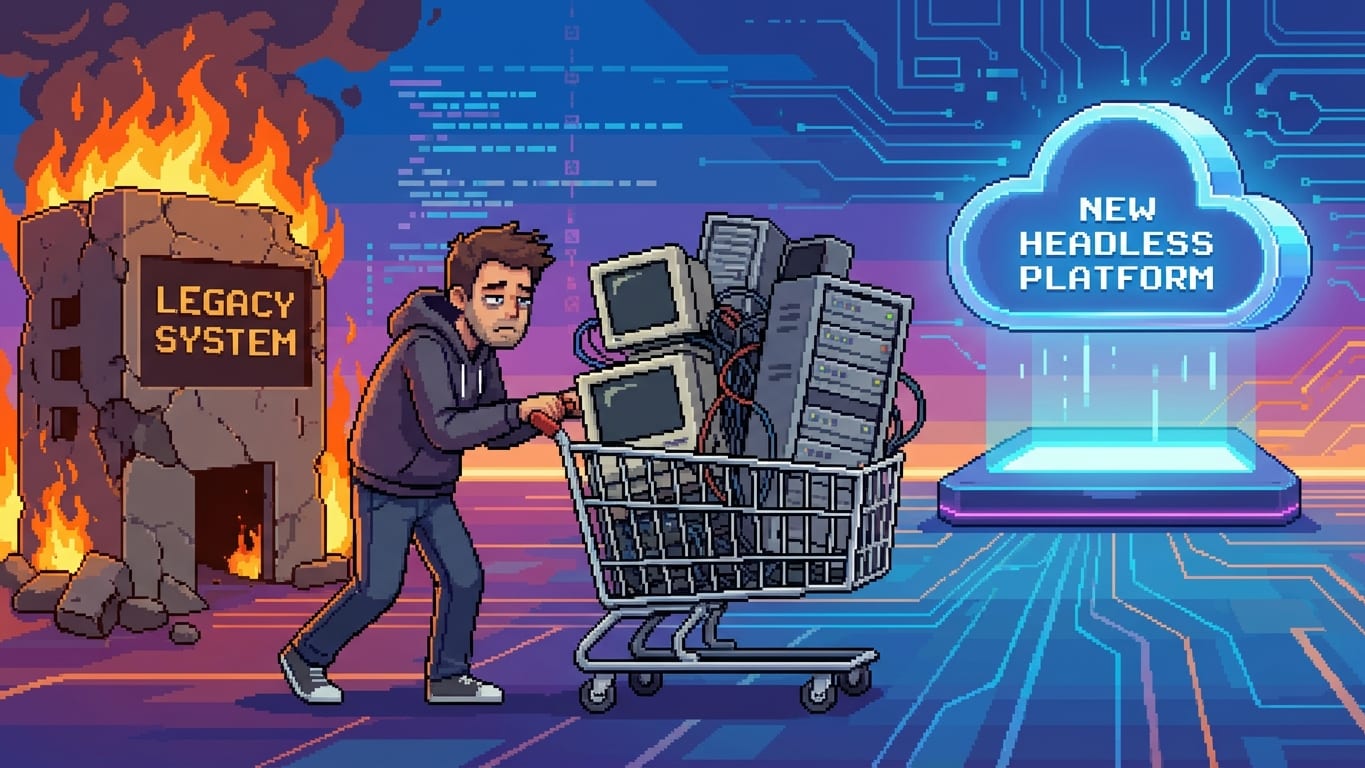
I once worked on a migration involving dozens of brand websites for a major global CPG company. Every site ran on a different version of the same legacy system. Content models had drifted apart over years of independent maintenance. Rich text fields were the worst - full of inline styles, hardcoded URLs, embedded layout assumptions that nobody remembered putting there. Six months later, we got everything into the new headless platform. Technically, we succeeded. In practice, we had relocated every structural problem into a system that now made them harder to fix.
That project taught me something I keep seeing repeated across the industry: most CMS migrations fail before the first content record moves. The platform is rarely the problem. Nobody cleaning up the mess before packing it into boxes is.
Content models carry their history with them
Moving a bad content model to a new platform just locks that bad model in place.
A content model that evolved through years of shortcuts and edge cases will bring all of that baggage into the new system. Every field that exists “because someone needed it once,” every content type that overlaps with two others, every relationship that made sense in 2019 but not today - all of it travels with you. Changing a content model after migration means doing another migration. Nobody wants to do that.
The migration window is your one realistic opportunity to fix this. You are already touching every piece of content. Stakeholders are engaged. Budget is allocated. Skip the cleanup now and you will spend the next two years explaining why things are the way they are. I have written about this dynamic before in the context of legacy patterns becoming technical debt in modern architecture. What you carry forward defines what you can build next.
Integrations are the product
Auth, search, preview, webhooks, CDN invalidation. Most migration plans treat these as implementation details - boxes on an architecture diagram that someone fills in during sprint three. They should be treated as product requirements from day one.
If integrations are not mapped before kick-off, someone is reverse-engineering production behavior at 11pm with live traffic on the line. I have watched it happen. A webhook chain that nobody documented fires during cutover, breaks a downstream system, and suddenly the migration team is debugging someone else’s automation in a system they have never seen before.
Test every integration against the new platform before you move a single record. Discovering an undocumented dependency during go-live is the kind of surprise that costs weeks.
Legacy logic hides inside the content
This is the one that gets teams six weeks after launch.
Legacy systems accumulate logic inside content itself. Rich text fields with embedded components. Content entries that double as configuration. Workflow states that encode business rules nobody wrote down. None of this shows up in a schema export. It all looks like clean data until it hits a new rendering engine and breaks in ways nobody can explain.
Treating a migration as a copy job guarantees you will carry that hidden logic forward. The actual work of migrating is deciding what the content means independent of the old platform - stripping away the assumptions, restructuring the fields, and making sure the new system can render everything without guessing.
Composable without discipline is distributed chaos
Moving to a composable architecture during migration sounds like the smart play. Decouple the CMS from the frontend. Separate content from delivery. Pick best-of-breed tools for each concern.
But without contracts and ownership between those systems, you end up with five smaller services that are somehow harder to debug than the monolith they replaced. Each service needs defined boundaries, explicit APIs, and someone accountable for its behavior. The discipline part of composable is the part that makes it work. Splitting things up is the easy half.
I have seen teams celebrate going composable only to realize three months later that nobody owns the space between the services. That space is where production incidents live.
Developers optimize for not being woken up at 2am
Every technical decision in a migration ultimately comes down to stability and predictability.
Developers do not care about the elegance of your migration plan. They care about whether the system will email them at 2am because a content update triggered a cascade of failures nobody anticipated. Clear boundaries, reliable contracts, observable behavior. That is the bar.
If your migration creates a system that is harder to reason about than the one it replaced, you have just moved the complexity somewhere less visible. That is worse, because now nobody knows where to look when something breaks.
Migrations are difficult
I should be honest about the difficulty here. Cleaning up before a migration sounds obvious on paper, but in practice it means telling stakeholders that the timeline is longer and the scope is bigger than they want to hear. Content model restructuring requires editorial buy-in on top of engineering sign-off. Integration mapping requires institutional knowledge that may have left the company along with the people who built the original system.
Sometimes you inherit a migration that is already scoped, budgeted, and promised. The cleanup window does not exist because leadership already committed to a date. In those situations, you do the best you can, document what you could not fix, and make sure the team knows where the bodies are buried.
The perfect migration does not exist. The informed one is dramatically better than the naive one though.
Concluding
Migrations look like technical projects from the outside. From the inside, they are organizational renegotiations disguised as platform swaps. The content model, the integrations, the hidden logic, the contracts between systems - all of it needs to be confronted before a single record moves.
Please, try to not relocate the mess. Use the moment you have from the migration project to fix it.
On this page
Related articles

We have collectively forgotten what monoliths are
Exploring the misconception of modern CMS platforms as monoliths and clarifying the distinctions between true monolithic systems and today's flexible, API-driven content management solutions.
- Composable architecture
- CMS
- API design

Your team is the key to success when going headless
People's choices, ability to roll with the punches, and how well they play in the sandbox together bring the magic of headless technology to life.
- Composable architecture
- CMS
- API design

CMS Showdown do you need a page builder or a data modeler?
Explore the differences between page builder and data modeler CMSs, their unique features, and how they cater to varying organizational needs.
- Composable architecture
- CMS
- Content ops