We moved the difficulty. We didn't make it disappear.
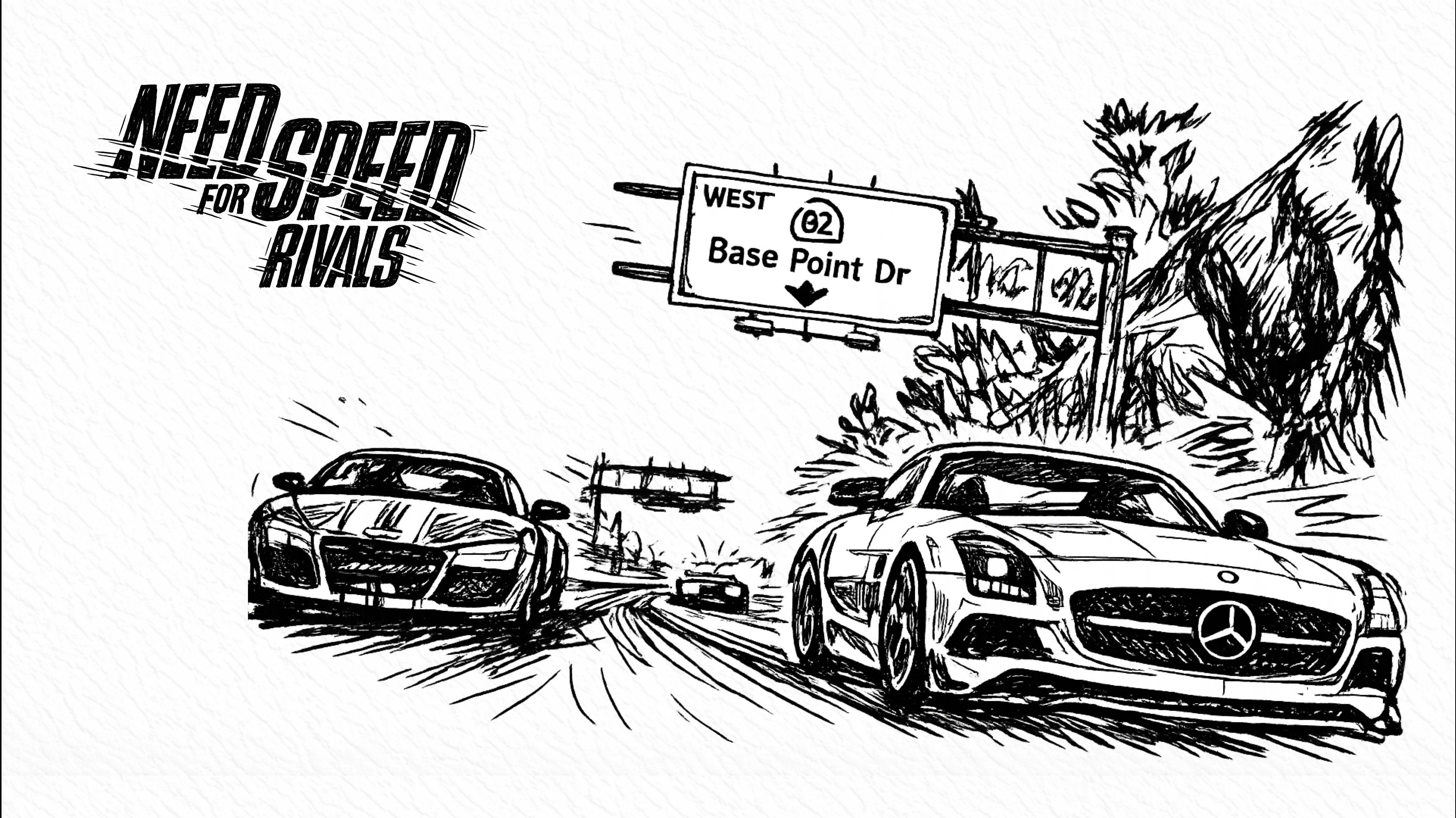
In 2013, I built the launch campaign website for EA’s Need for Speed Rivals. Custom routing. Custom state management. A tweening engine. A custom video player with subtitle tracks across 35 languages. Event-driven voice lines. Canvas animations. Five weeks. One frontend developer.
We didn’t call it an SPA back then. We just called it “the website.” Looking back, it was absolutely an SPA. A chaotic one, held together by caffeine and a suspicious amount of optimism.
I rebuilt the whole thing recently for my Vue.js Amsterdam 2026 talk. The contrast between the two codebases was the basis for the talk.
The brief that started it
The golden age of ad agencies was wild. At AKQA we worked with massive clients, absurd budgets, and briefs that felt like someone had confused the browser with a game engine.
Need for Speed Rivals needed to be a fully immersive, cinematic, multi-language web experience. Interactive video. Canvas-rendered car choices. Slow-motion 360-degree crash sequences. A quiz that tracked your decisions and delivered a personalised ending.
Eleven months of creative work landed on a tiny dev team. Five weeks to make it real. One frontend developer, two backend developers, one QA. That frontend developer was me.
No framework worth mentioning. No modern tooling. jQuery 2, the DOM, Grunt.js, and whatever I could invent under pressure. So I built the missing parts.
The custom-everything era
The 2013 codebase is a museum of painful necessity. I wrote a custom router with history management and deep linking. Built state management around a global window.jsonData object. Bolted together a JavaScript templating layer with Mustache. Wrote a tweening engine for frame-by-frame animations. Built a DOM-scanning bootstrap system to initialise JavaScript from markup. Handled audio control, canvas animation, subtitle tracks, localisation, and build tooling. Same app, 35 languages.
Somehow, it shipped.
That line matters because nostalgia lies. It would be easy to romanticise that moment - look how much we understood back then, look how much we built by hand. That would be lazy thinking. We were solving painful problems with brute force because the ecosystem hadn’t solved them yet.
The rebuild
For 2026, I used Vue 3, Pinia, vue-i18n, and Vite. The architecture was legible. The intent was obvious. The implementation didn’t feel like a survival tactic.
Vue handled the SPA structure, templating, and reactivity. Vue Router replaced my homemade routing layer. Pinia replaced the mutable global store. A modern animation tool and Vue transitions replaced the tweening engine. vue-i18n handled localisation without making me question my life choices. Vite turned the build step from an obstacle into a footnote.
Holy moly, Vue.js has DX down. It was a blast to build this same app in the modern era.
The abstraction shift
In 2013, routing meant manually wiring browser history, matching paths, tearing down controllers, swapping scenes, and hoping you hadn’t left state behind in some forgotten object. Debugging it meant reading your own improvised architecture and pretending it had been a plan all along.
In 2026, routing means createRouter, createWebHistory, a route array, and lazy-loaded components.
Same outcome. Smaller surface area.
State management followed the same arc. window.jsonData with hand-written getData and cleanData functions, including special cases for nested structures because real apps always punish simplistic abstractions - versus a typed Pinia store with explicit state, getters, and actions.
The tweening engine worked but wasn’t optimized. I built it because I had no alternative. Recently, I actually rebuilt it in a modern way and it works surprising well. Additionally, I used Vue <Transition> around the app.
The code shrank. The capability didn’t. That’s what progress actually looks like in software.
The overhead that vanished
For years, frontend engineering came with a quiet tax. You wanted rich interactivity, so you had to build half a framework before you could build the actual product. Routing, state, transitions, localisation, bundling, view lifecycles - every meaningful feature came with infrastructure overhead.
That overhead is no longer the main event.
Modern frameworks absorbed the pain. The community turned repeated suffering into stable patterns. Those patterns became libraries. Those libraries became defaults. The defaults became boring.
Good. Boring is what success looks like in software. Boring means thousands of developers no longer need to solve the same problem in parallel.
Get off my lawn!
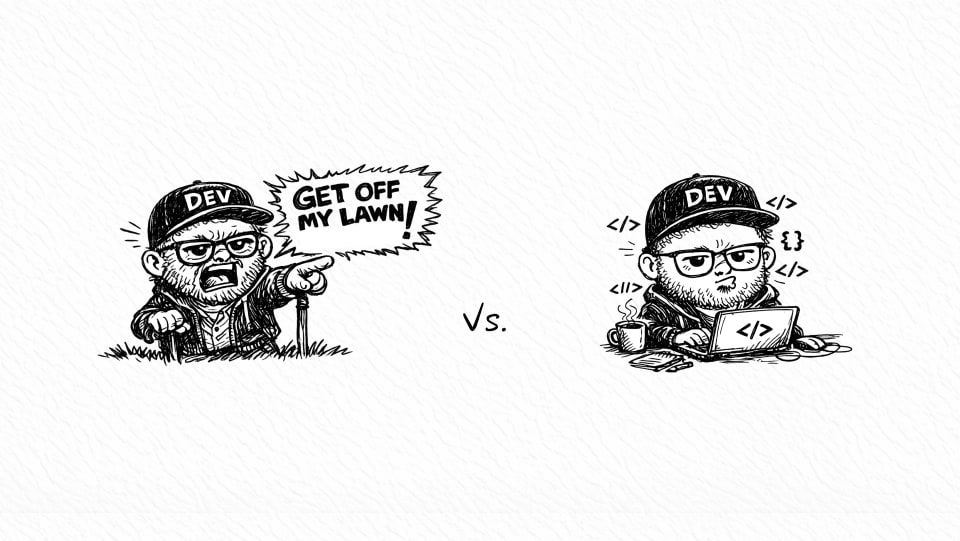
There’s a version of this story that curdles into a “back in my day” lecture. Real developers used to understand the browser. Everyone now just imports abstractions they don’t deserve. I’ve felt the pull of that narrative. I rejected it deliberately.
That version helps nobody.
Yes, I built a tweening engine in 2013. No, I don’t think most developers should have to do that now. The same goes for writing raw XMLHttpRequest, hand-rolling state containers, or building your own router because the ecosystem hasn’t caught up yet. That isn’t craftsmanship. That’s unpaid infrastructure work.
The craft moved.
The modern skill isn’t rebuilding every abstraction from scratch to prove you can. It’s understanding enough to choose the right abstraction, use it well, and debug it when it breaks. If you use Vue Router with no idea how browser history works, that gap will hurt you the moment deep linking breaks in production. Abstractions remove repetition, not responsibility.
That distinction matters more now than ever.
AI is just the next layer
At Vue.js Amsterdam I framed it this way.
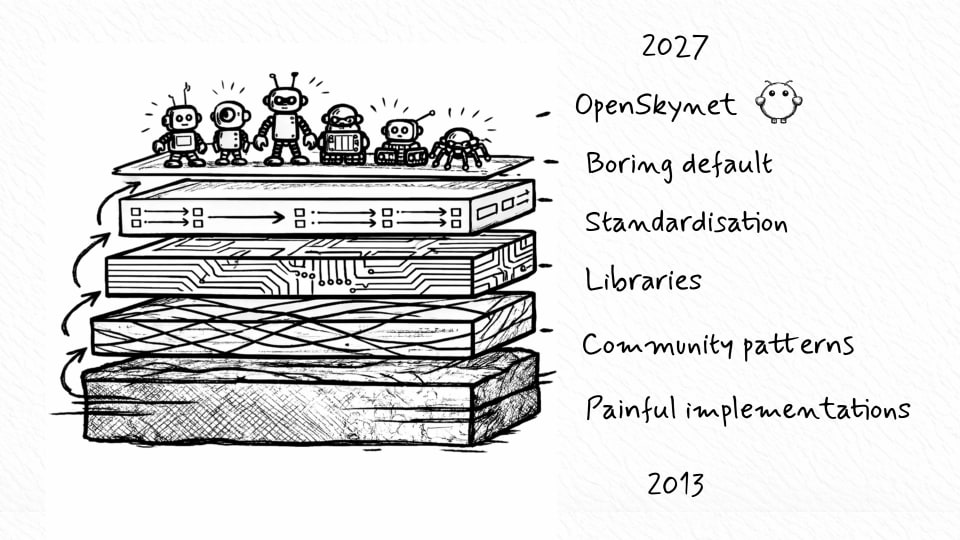
In 2013, the question was: how do I implement routing? In 2026, the question is: which router fits this architecture? In 2027, the question becomes a command - I need routing between these views. Add it.
That shift is already happening.
The same pattern keeps repeating. Painful implementation becomes shared understanding. Shared understanding becomes a library. The library becomes a standard. The standard becomes a boring default. Then automation rises another layer and hides more of the pain.
AI isn’t some alien disruption. It’s the next expression of that pattern.
People act as if the machine appeared out of nowhere and started generating code by magic. It didn’t. It stands on decades of accumulated engineering labor. It can scaffold a Vue app with routing, state, and i18n because thousands of developers spent years building Vue, Vue Router, Pinia, Vite, TypeScript tooling, and the conventions around them. AI compressed access to that work. It didn’t erase it.
The shoulders we stand on
Every clean abstraction in 2026 started life as somebody’s ugly workaround in 2013. The developers who hand-rolled routers, state machines, asset pipelines, and view systems laid the foundation. Framework authors took those painful lessons and turned them into reusable patterns. Communities refined those patterns into ecosystems people could trust.
Vue is one of the best examples of that evolution. Took ideas that had already proven themselves, stripped away the ceremony, gave developers a more human mental model. Then the ecosystem grew around it. Vue Router. Vuex, then Pinia. Nuxt. Vite. VueUse. Layer after layer of solved problems.
AI agents will stand on those shoulders too. Not instead of them - on top of them.
That’s not a threat to the craft. That trajectory is the craft.
Concluding
Rebuilding that Need for Speed Rivals project made one thing obvious: the difficulty didn’t disappear. We moved it.
In 2013, the difficulty lived in the implementation. In 2026, it lives in architecture, judgment, debugging, and choosing the right level of abstraction. In 2027, more of it will move again as AI absorbs another layer of repetitive work.
The developers who thrive in the next phase won’t be mourning the death of hand-rolled infrastructure. They’ll be the ones who understand the layers beneath the abstraction well enough to use the new leverage properly.
The hard part never vanished. We just got better at deciding where it belongs.
On this page
Related articles

The biggest risk to AI is the enterprise org chart
This article argues that the real risk of corporate AI is not rogue superintelligence but how large organizations deploy it, usually in service of cost-cutting rather than creating new value. Big enterprises buy AI like office furniture, wrapped in committees, procurement, and risk matrices, so it ends up optimizing ticket deflection and headcount instead of enabling innovation. The real bottleneck is bureaucracy, not intelligence. In contrast, a roughly 500-person company has enough depth to build serious systems but short enough communication paths that the person with the problem can help build the solution. AI lets domain experts prototype directly, shortening the loop between friction and fix. The key is governance that enables safe experimentation instead of vetoing it, using AI to expand reach rather than just reduce costs.
- Composable architecture
- AI engineering
- Frontend

Intuition and the real cost of research
This article explores how AI changes the balance between research-heavy processes and intuition-driven building, especially in product and technical work. The author reflects on a career of moving faster than surrounding teams, where strong intuition (really compressed experience from shipping many similar things) often clashed with expectations for lengthy research and documentation. As AI makes implementation and iteration dramatically cheaper and faster, the true bottleneck shifts from building to deciding what is worth building. Research still matters for those without established mental models, and for environments where stakeholders need evidence and paper trails. But when iteration costs hours instead of weeks, over-indexing on analysis can become the real drag. The piece argues that, in an AI-enabled world, experienced intuition is not anti-process; for the right people and problems, it is the process.
- Composable architecture
- AI engineering
- Frontend

TDD finally makes sense
AI coding tools have removed the old excuse that test driven development is too slow or too costly. When AI can generate both implementation and test scaffolding in minutes, the time cost of writing tests first collapses, turning TDD into an obvious quality and productivity win. The real risk now is vibe coding, where developers ship AI generated code that looks fine but crumbles under real edge cases. By using AI for planning, then encoding that thinking as tests and letting the AI implement against them, teams get faster feedback, more reliable code, and fewer hotfixes. In an AI assisted world, the competitive advantage shifts to defining behavior and edge cases up front, and TDD becomes the discipline that makes that thinking explicit.
- Composable architecture
- AI engineering
- Frontend