Tag · 9 essays

Career

Writing tagged "Career".

The biggest risk to AI is the enterprise org chart

This article argues that the real risk of corporate AI is not rogue superintelligence but how large organizations deploy it, usually in service of cost-cutting rather than creating new value. Big enterprises buy AI like office furniture, wrapped in committees, procurement, and risk matrices, so it ends up optimizing ticket deflection and headcount instead of enabling innovation. The real bottleneck is bureaucracy, not intelligence. In contrast, a roughly 500-person company has enough depth to build serious systems but short enough communication paths that the person with the problem can help build the solution. AI lets domain experts prototype directly, shortening the loop between friction and fix. The key is governance that enables safe experimentation instead of vetoing it, using AI to expand reach rather than just reduce costs.

  • Composable architecture
  • AI engineering
  • Frontend
  • Product strategy

We moved the difficulty. We didn't make it disappear.

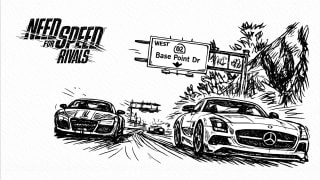
In 2013 I built the Need for Speed Rivals launch site from scratch in five weeks - custom router, custom state, custom tweening engine, 35 languages, no framework worth mentioning. I rebuilt it recently for my Vue.js Amsterdam 2026 talk. The contrast broke my brain in the best way, and it clarified something I've been trying to articulate about AI, abstraction, and what "craft" actually means now.

  • Composable architecture
  • AI engineering
  • Frontend
  • Craft

Intuition and the real cost of research

This article explores how AI changes the balance between research-heavy processes and intuition-driven building, especially in product and technical work. The author reflects on a career of moving faster than surrounding teams, where strong intuition (really compressed experience from shipping many similar things) often clashed with expectations for lengthy research and documentation. As AI makes implementation and iteration dramatically cheaper and faster, the true bottleneck shifts from building to deciding what is worth building. Research still matters for those without established mental models, and for environments where stakeholders need evidence and paper trails. But when iteration costs hours instead of weeks, over-indexing on analysis can become the real drag. The piece argues that, in an AI-enabled world, experienced intuition is not anti-process; for the right people and problems, it is the process.

  • Composable architecture
  • AI engineering
  • Frontend
  • Product strategy

TDD finally makes sense

AI coding tools have removed the old excuse that test driven development is too slow or too costly. When AI can generate both implementation and test scaffolding in minutes, the time cost of writing tests first collapses, turning TDD into an obvious quality and productivity win. The real risk now is vibe coding, where developers ship AI generated code that looks fine but crumbles under real edge cases. By using AI for planning, then encoding that thinking as tests and letting the AI implement against them, teams get faster feedback, more reliable code, and fewer hotfixes. In an AI assisted world, the competitive advantage shifts to defining behavior and edge cases up front, and TDD becomes the discipline that makes that thinking explicit.

  • Composable architecture
  • AI engineering
  • Frontend
  • Product strategy

When Output Is Cheap, Taste Is Everything

This article explores how AI has radically reduced the cost of producing things, creating an intoxicating sense of limitless output for ambitious people. But when building becomes almost frictionless, the real bottleneck shifts from implementation to judgment. The author argues that taste (the ability to choose what is worth building) and genuine rest become the true sources of leverage. AI is an exceptional how engine, but deciding what and why remains a deeply human responsibility. Without rest, our judgment degrades, and we risk building more but meaning less. The piece encourages pairing curiosity and experimentation with discipline, restraint, and strategic downtime.

  • Composable architecture
  • AI engineering
  • Product strategy
  • Career